The Space Economy Has a Power Problem...And It’s Getting Worse.
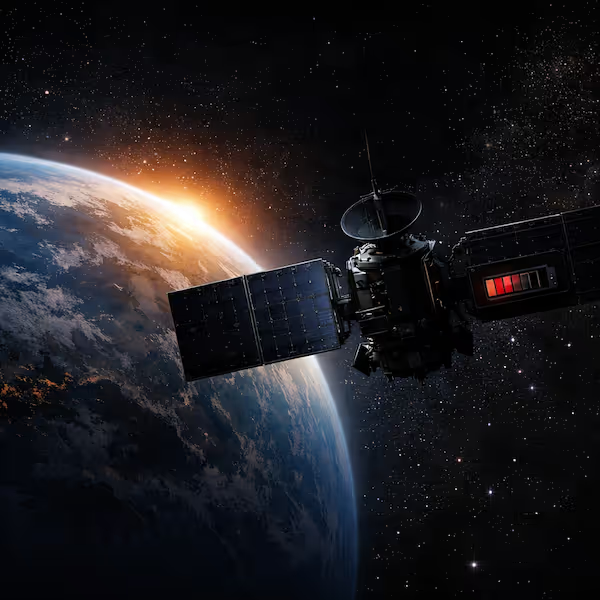
Thousands of satellites orbiting Earth right now make our GPS navigation, weather forecasts, broadband connections, and defense systems possible. That number is only expected to grow, especially as we race to keep up with AI demands back on Earth.
Satellites underpin our daily economy and the trillions of dollars that make up the space economy. But there is a power problem.
They underpin our daily economy. But the space economy has a power problem that no one is addressing.
Satellites Run on Sunshine — and That's a Problem
A satellite today is powered by the sun, which means they are constantly chasing the sun. When sats fly in orbits that optimize for the most time in the sun, they are not flying in the most optimized path and they are giving up time that they can generate revenue.
A third of a satellite’s life is spent in Earth’s shadow, unable to charge and complete their missions. The reality is that a satellite spends only about 10% of its time doing what it was actually designed to do while in orbit.
That time in the shadow isn't just an inconvenience. When a satellite is power constrained in the dark, service is degraded.
The result? Shorter mission lifespans and reduced working windows that have major downstream impacts on civil and defense missions. When a satellite dies early, it's not just a financial loss. It is a gap in the infrastructure modern life depends on.
Powering Up Space
Mantis Space was built to solve this problem. We're developing technology that powers the space-based economy. Regardless of where a satellite is on its orbital journey, we ensure it has the power it needs.
As a power infrastructure company, we can extend a satellite’s life, increase its revenue potential, and enable more missions on every orbit. Today, that allows for significantly increased return on investment for those already working in space. In the future, that means companies can fly cheaper satellites with less focus on solar arrays and batteries, and can empower future lunar missions and operations.
No more designing around darkness. No more degraded batteries. No more capability gaps.
The result is satellites that operate at full capacity, around the clock. The future of the space economy demands reliable, sustainable power — and we're building exactly that.